
 Español
 Portugues
 Pусский
 Français
 Deutsch
 العربية
 Türk dili
 中文
中文 فارسی
فارسی
Cooling Machiney
Cooling Machinery: An Overview Cooling machinery plays a critical role in various industries, ensuring optimal temperature control for processes, equipment, and environments. These systems are designed to remove excess heat, maintain stable conditions, and enhance efficiency across applications such as manufacturing, data centers, food storage, and HVAC (heating, ventilation, and air conditioning). Types of Cooling Machinery 1. Air Coolers: These systems use air as the cooling medium, circulating it through heat exchangers to dissipate heat. They are commonly used in HVAC systems and industrial processes where water scarcity is a concern. 2. Liquid Cooling Systems: More efficient than air cooling, these systems utilize water or other coolants to absorb and transfer heat. They are widely employed in high-performance computing, automotive engines, and heavy machinery. 3. Refrigeration Units: These systems rely on refrigerants to lower temperatures, making them essential for food preservation, pharmaceuticals, and climate-controlled storage. 4. Evaporative Coolers: By leveraging the principle of water evaporation, these machines provide energy-efficient cooling, often used in dry climates or large industrial spaces. 5. Thermal Management Systems: Advanced solutions like heat pipes or phase-change materials are used in electronics and aerospace to manage extreme thermal loads. Key Features and Benefits Modern cooling machinery incorporates advanced technologies such as variable speed compressors, smart sensors, and IoT-enabled controls to optimize performance. Energy efficiency is a major focus, with many systems designed to reduce power consumption while maintaining reliability. Additionally, modular designs allow for scalability, enabling customization based on specific cooling demands. Applications - Industrial: Cooling machinery prevents overheating in manufacturing equipment, ensuring continuous operation and prolonging machinery life. - Data Centers: High-density servers generate significant heat, requiring precision cooling to avoid downtime. - Healthcare: Medical equipment and laboratories rely on stable temperatures for accurate results and safe storage of sensitive materials. - Commercial Buildings: HVAC systems enhance occupant comfort while improving energy efficiency. Future Trends Sustainability is driving innovation in cooling machinery, with a shift toward eco-friendly refrigerants and renewable energy integration. Smart cooling systems, powered by AI and predictive analytics, are also gaining traction, enabling real-time adjustments and predictive maintenance. In summary, cooling machinery is indispensable across industries, combining advanced engineering with energy-efficient solutions to meet diverse thermal management needs. As technology evolves, these systems will continue to play a vital role in enhancing productivity and sustainability.
Products
Category:
-
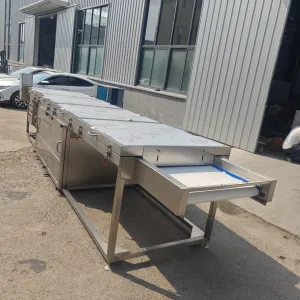
6-meter Food Refrigeration cooling machine
Category: Cooling MachineBrowse number: 49Number:Release time: 2025-11-11 11:08:47Food cooling machines are indispensable equipment in the global food industry, designed to rapidly lower the temperature of food products—from freshly cooked meals to raw ingredients—preventing bacterial growth and preserving quality, flavor, and nutritional value. Unlike traditional refrigeration that focuses on long-term storage, these machines specialize in quick cooling (often reducing temperatures from 140°F/60°C to 40°F/4°C within 2 hours, complying with FDA’s food safety guidelines) to minimize the "danger zone" where pathogens thrive. They cater to diverse sectors: commercial kitchens rely on blast chillers to cool large batches of cooked food before storage, reducing spoilage and extending shelf life by 30–50%; food processing plants use spiral coolers for high-volume products like baked goods, meats, and dairy, ensuring consistent cooling without compromising texture; and catering businesses leverage portable food cooling units to maintain safe temperatures during transport or outdoor events. Modern food cooling machines integrate energy-efficient technologies—such as inverter compressors and heat recovery systems—lowering operational costs while meeting eco-friendly standards (e.g., using low-GWP refrigerants like CO₂). Key benefits include reducing food waste (a critical issue costing the industry $400 billion annually, per UN data), ensuring compliance with global food safety regulations (FSMA, EU Regulation 178/2002), and enhancing productivity by enabling faster turnaround of food products. Whether for small-scale cafes or large industrial facilities, investing in a high-performance food cooling machine is a strategic choice to uphold safety, improve efficiency, and build consumer trust in food quality. -
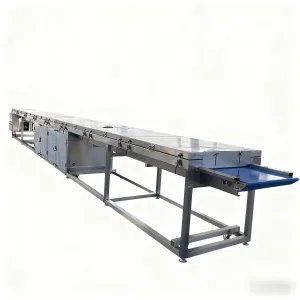
12m Food low-temperature cooling machine
Category: Cooling MachineBrowse number: 46Number:Release time: 2025-11-11 16:22:41A food refrigerator is a cornerstone asset for B2B food businesses—from restaurants, cafes, and bakeries to large-scale processing plants and distribution centers—delivering precise temperature control (typically 0–4°C) to preserve food freshness, inhibit microbial growth, and ensure compliance with global safety standards like HACCP, FDA, and EU 10/2011. Unlike standard household fridges, commercial and industrial food refrigerators are engineered for heavy-duty use, with larger storage capacities, durable construction, and energy-efficient systems that support 24/7 operation. Equipped with food-grade stainless steel interiors (resistant to corrosion, easy to sanitize, and non-reactive with food), these units prevent cross-contamination while withstanding frequent cleaning—critical for high-volume food handling. Key features include intelligent temperature monitoring (with ±0.2°C accuracy and audible/visual alarms for deviations), adjustable shelves to accommodate diverse food types (from bulk produce to packaged meats), and leak-proof insulation that reduces cold air loss by up to 30%, cutting energy costs for B2B operators. Whether used for short-term storage of prepped ingredients in a restaurant kitchen or long-term preservation of perishables in a warehouse, food refrigerators come in customizable designs: compact under-counter models for space-constrained cafes, walk-in units for industrial facilities, and glass-door display fridges for retail environments (to showcase products while maintaining freshness). By investing in a reliable food refrigerator, businesses minimize food waste (extending shelf life of perishables by 2–5 times), avoid costly safety violations, and maintain consistent product quality—ultimately enhancing customer trust and operational efficiency across the food supply chain. -
15 meter Food refrigeration safety machine
Category: Cooling MachineBrowse number: 46Number:Release time: 2025-11-11 16:36:23A food refrigerator is a cornerstone asset for B2B food businesses—from restaurants, cafes, and bakeries to large-scale processing plants and distribution centers—delivering precise temperature control (typically 0–4°C) to preserve food freshness, inhibit microbial growth, and ensure compliance with global safety standards like HACCP, FDA, and EU 10/2011. Unlike standard household fridges, commercial and industrial food refrigerators are engineered for heavy-duty use, with larger storage capacities, durable construction, and energy-efficient systems that support 24/7 operation. Equipped with food-grade stainless steel interiors (resistant to corrosion, easy to sanitize, and non-reactive with food), these units prevent cross-contamination while withstanding frequent cleaning—critical for high-volume food handling. Key features include intelligent temperature monitoring (with ±0.2°C accuracy and audible/visual alarms for deviations), adjustable shelves to accommodate diverse food types (from bulk produce to packaged meats), and leak-proof insulation that reduces cold air loss by up to 30%, cutting energy costs for B2B operators. Whether used for short-term storage of prepped ingredients in a restaurant kitchen or long-term preservation of perishables in a warehouse, food refrigerators come in customizable designs: compact under-counter models for space-constrained cafes, walk-in units for industrial facilities, and glass-door display fridges for retail environments (to showcase products while maintaining freshness). By investing in a reliable food refrigerator, businesses minimize food waste (extending shelf life of perishables by 2–5 times), avoid costly safety violations, and maintain consistent product quality—ultimately enhancing customer trust and operational efficiency across the food supply chain.
News
Category:
-
[Company News]Jiashun Introduces New Tunnel Cooling System for Faster Choc...
2025-11-21 11:41:30
Case
Category:
No search results found!
Video
Category:
No search results found!
Download
Category:
No search results found!
Job
Category:
No search results found!
Featured Products
No search results found!



 WhatsApp
 Phone
Phone