
 Español
 Portugues
 Pусский
 Français
 Deutsch
 العربية
 Türk dili
 中文
中文 فارسی
فارسی
stainless steel cooling system
Stainless Steel Cooling System: An Overview A stainless steel cooling system is a highly efficient and durable solution designed to manage heat dissipation in various industrial, commercial, and residential applications. Known for its corrosion resistance, strength, and longevity, stainless steel is an ideal material for cooling systems exposed to harsh environments, high temperatures, or aggressive chemicals. Key Features and Benefits 1. Corrosion Resistance Stainless steel's chromium content forms a passive oxide layer, protecting the system from rust and degradation caused by moisture, chemicals, or extreme temperatures. This makes it suitable for marine, chemical processing, and food-grade applications. 2. Durability and Strength Unlike traditional materials like copper or aluminum, stainless steel maintains structural integrity under high pressure and thermal stress. It resists deformation, ensuring long-term reliability with minimal maintenance. 3. Hygienic Properties In industries like food processing, pharmaceuticals, and healthcare, stainless steel’s smooth, non-porous surface prevents bacterial growth and allows easy cleaning, meeting stringent hygiene standards. 4. Thermal Efficiency Stainless steel efficiently conducts and dissipates heat, enhancing cooling performance. Its resistance to scaling and fouling ensures consistent thermal transfer over time. 5. Environmental Resistance It performs well in extreme conditions, including high humidity, saltwater exposure, and acidic or alkaline environments, reducing the risk of premature failure. Applications - Industrial Machinery: Used in power plants, refineries, and manufacturing to cool engines, reactors, and hydraulic systems. - HVAC Systems: Provides reliable cooling in commercial buildings and data centers. - Food and Beverage Industry: Ensures safe, contamination-free cooling for processing equipment. - Marine and Offshore: Withstands saltwater corrosion in ship engines and offshore platforms. - Renewable Energy: Supports thermal management in solar and geothermal systems. Design Considerations - Material Grade: Austenitic grades (e.g., 304, 316) are common for their balance of cost and performance. - System Configuration: Can include heat exchangers, chillers, or liquid cooling loops tailored to specific needs. - Maintenance: While low-maintenance, periodic inspections ensure optimal performance. Conclusion A stainless steel cooling system offers unmatched durability, efficiency, and versatility, making it a preferred choice across industries. Its resistance to corrosion, heat, and contamination ensures reliable operation in demanding environments, reducing downtime and lifecycle costs. Whether for industrial processes, critical infrastructure, or sensitive applications, stainless steel cooling systems deliver sustainable performance with minimal environmental impact.
Products
Category:
Cooling Machine
-
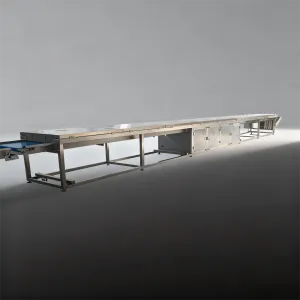
10m Food low-temperature cooling machine
Category: Cooling MachineBrowse number: 48Number:Release time: 2025-11-11 16:08:22A food low-temperature cooling machine is a vital asset for B2B food businesses—from processing plants and seafood facilities to bakeries and distribution centers—delivering precise sub-10°C cooling to preserve food quality, inhibit microbial growth, and extend shelf life. Unlike standard coolers, this specialized equipment operates at controlled low temperatures (typically -5°C to 8°C, adjustable for specific food types) to address the unique needs of perishables like raw meats, seafood, dairy, and pre-cooked meals, preventing spoilage and reducing waste in the supply chain. Equipped with advanced components such as energy-efficient compressors, food-grade stainless steel interiors, and intelligent temperature monitoring systems (with ±0.2°C accuracy), it ensures consistent cooling while complying with global food safety standards like HACCP, FDA, and EU 10/2011. Key benefits include rapid post-production cooling (slowing bacterial growth by up to 90% compared to ambient storage), preservation of nutritional value and flavor (avoiding texture degradation in sensitive foods like fruits or pastries), and compatibility with industrial workflows—whether integrated into production lines for continuous cooling or used in batch processing for small-scale operations. Designed for durability and ease of maintenance, food low-temperature cooling machines feature leak-proof insulation (reducing cold air loss and energy consumption by 25–30%), easy-to-clean surfaces (supporting hygiene protocols), and optional IoT connectivity for remote temperature tracking—critical for B2B clients managing multi-site facilities or seeking audit-ready data. Suitable for both indoor and semi-outdoor use (with weather-resistant designs for industrial yards), these machines come in customizable sizes, from compact countertop units for small cafes to large industrial systems for bulk food storage, making them indispensable for businesses prioritizing food safety, operational efficiency, and cost savings in low-temperature food management. -
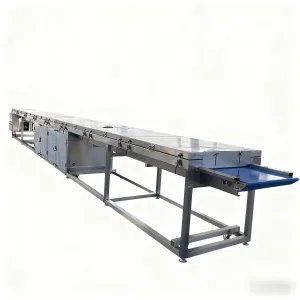
15 meter Food refrigeration safety machine
Category: Cooling MachineBrowse number: 46Number:Release time: 2025-11-11 16:36:23A food refrigerator is a cornerstone asset for B2B food businesses—from restaurants, cafes, and bakeries to large-scale processing plants and distribution centers—delivering precise temperature control (typically 0–4°C) to preserve food freshness, inhibit microbial growth, and ensure compliance with global safety standards like HACCP, FDA, and EU 10/2011. Unlike standard household fridges, commercial and industrial food refrigerators are engineered for heavy-duty use, with larger storage capacities, durable construction, and energy-efficient systems that support 24/7 operation. Equipped with food-grade stainless steel interiors (resistant to corrosion, easy to sanitize, and non-reactive with food), these units prevent cross-contamination while withstanding frequent cleaning—critical for high-volume food handling. Key features include intelligent temperature monitoring (with ±0.2°C accuracy and audible/visual alarms for deviations), adjustable shelves to accommodate diverse food types (from bulk produce to packaged meats), and leak-proof insulation that reduces cold air loss by up to 30%, cutting energy costs for B2B operators. Whether used for short-term storage of prepped ingredients in a restaurant kitchen or long-term preservation of perishables in a warehouse, food refrigerators come in customizable designs: compact under-counter models for space-constrained cafes, walk-in units for industrial facilities, and glass-door display fridges for retail environments (to showcase products while maintaining freshness). By investing in a reliable food refrigerator, businesses minimize food waste (extending shelf life of perishables by 2–5 times), avoid costly safety violations, and maintain consistent product quality—ultimately enhancing customer trust and operational efficiency across the food supply chain.
News
Category:
-
[Company News]Jiashun Introduces New Tunnel Cooling System for Faster Choc...
2025-11-21 11:41:30
Case
Category:
No search results found!
Video
Category:
No search results found!
Download
Category:
No search results found!
Job
Category:
No search results found!
Featured Products
No search results found!



 WhatsApp
 Phone
Phone